
A Content Repurposing Strategy That Actually Compounds (With Examples)
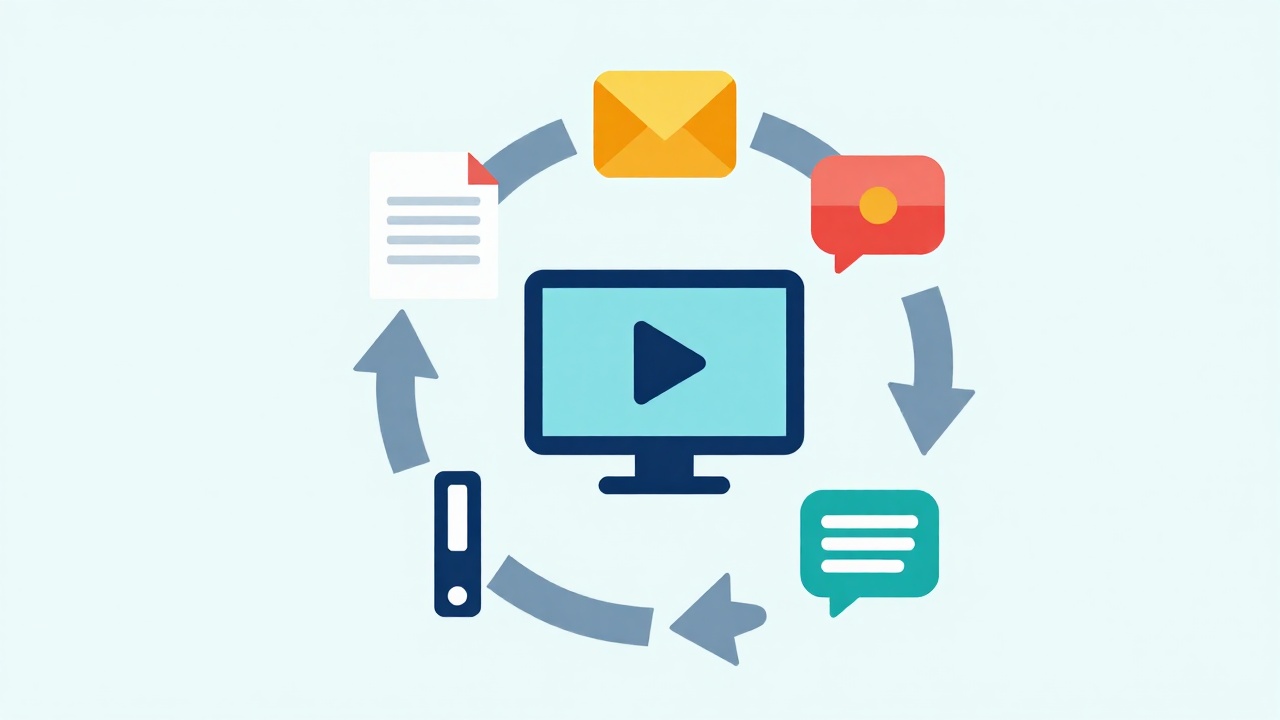
A content repurposing strategy takes one piece of long-form content, usually a video you already recorded, and turns it into a blog post plus a week of smaller assets. The fastest place to start is to convert a video to a blog post and use that article as the anchor everything else points back to. Done right, the work compounds because search traffic keeps arriving long after the social posts have scrolled away.
TL;DR
- A content repurposing strategy turns one long-form video into a hub blog post and a week of downstream content: newsletter, clips, a carousel, and quote cards.
- The blog post is the compounding asset because it keeps pulling in search traffic while social posts fade in days.
- The five steps: pick the source, extract the transcript, build the hub article, derive social assets, then schedule and link back.
- Most repurposing fails because people copy-paste the same content everywhere instead of reshaping it for each format.
- The right tools (a transcript-to-article step, a clipper, a scheduler) make the whole loop repeatable in an afternoon.
Table of contents
- What a content repurposing strategy is
- Why most repurposing fails
- A content repurposing strategy in five steps
- Turning one video into a week of content
- Tools that make the strategy repeatable
- FAQ
What a content repurposing strategy is
A content repurposing strategy is a repeatable system for turning one substantial piece of content into many smaller ones, each shaped for the place it will live. It is not "post the same thing five times." It is taking the ideas inside a 20-minute video and giving each idea the format it deserves.
The key word is compounding. A YouTube video peaks in its first week and then fades. A blog post built from that same video keeps ranking, keeps getting found, and keeps sending readers to your product months later. That is why a smart strategy makes the blog post the hub and treats everything else as spokes that point back to it.
Think of your long-form video as the raw material and the strategy as the assembly line. You already did the hard part when you recorded the ideas. Repurposing is just refining that raw material into shapes that fit different audiences and different platforms.
There is also a distribution argument here. The people who watch your video, read your blog, open your newsletter, and scroll your feed are rarely the same people. A single idea reaches a much wider slice of your audience when it shows up in four places instead of one, and each format catches someone the others missed.
Why most repurposing fails
Most people who try repurposing quit within a month, and the reason is almost always the same: they treat it as duplication instead of translation. They lift a paragraph from the video description, paste it on LinkedIn, paste it again on X, and wonder why nothing lands.
Every platform rewards a different shape. A blog reader wants depth and structure. A LinkedIn reader wants one sharp idea. A short-form viewer wants a hook in the first two seconds. When you ignore those differences, the content feels flat everywhere and strong nowhere.
The second failure is doing it by hand every time. Manual repurposing is slow, so it gets skipped the moment you are busy. A strategy only compounds if you can actually run it every week, which means it has to be fast and mostly systematized.
A third, quieter failure is starting from the wrong asset. People often build the strategy around a social post or a thread, then wonder why the effort vanishes in a week. Social content is disposable by design. If your anchor is disposable, so is everything you attach to it, and the compounding never starts.
Here is the mindset shift that fixes both problems:
- Reshape, do not copy. One idea, many native formats.
- Anchor everything to a durable asset (the blog post), not a disposable one (a tweet).
- Systematize the boring steps so the strategy survives a busy week.
A content repurposing strategy in five steps

Here is the loop I recommend. It works whether your source is a video, a podcast episode, or a recorded webinar. Run it once and you will see how repeatable it becomes.
Step 1: Pick the source. Choose a piece of long-form content that already contains real substance: a tutorial, an interview, a talk. Ten minutes or more is ideal because it gives you enough ideas to spin out.
Step 2: Extract the transcript. The transcript is the backbone of everything downstream. Once you have clean text, you can reshape it into any format without rewatching the video. This is where you turn a YouTube video into a blog post as your first and most important derivative.
Step 3: Build the hub article. Turn the transcript into a structured, SEO-optimized blog post with headings, a summary, and a clear takeaway. This is the compounding asset, so give it the most care. If your source is audio only, the same flow lets you turn a podcast into a blog post with no extra effort.
Step 4: Derive the social assets. From that same article, pull a newsletter intro, two or three short clips, a carousel outline, and a handful of quote cards. Each one is a spoke that links back to the hub.
Step 5: Schedule and link back. Space the spokes across a week so one source feeds several days of posting. Every spoke should point back to the blog post, and the blog post should point to your product.
Because each step feeds the next, the whole strategy is a loop you can run again next week with a new video. That repeatability is what separates a real system from a one-off burst of effort. The same approach lets teams repurpose your YouTube videos at scale without hiring a content team.
Turning one video into a week of content
Let me make this concrete with a worked example. Say you run a SaaS and you recorded a 22-minute video called "5 onboarding mistakes that kill retention." Here is how one recording becomes seven days of content.
Monday, the hub. You extract the transcript and turn it into a 2,000-word blog post titled the same way, structured around the five mistakes with a fix for each. This is the piece that will rank and keep pulling in search traffic for months.
Tuesday, the newsletter. You take the article intro and the sharpest mistake, write a short email around it, and link readers to the full post. Subscribers who missed the video now get the idea in two minutes.
Wednesday and Thursday, the clips. You cut two short vertical clips from the video, one per mistake, each with a hook in the first two seconds. Both captions link back to the blog post.
Friday, the carousel. You outline a five-slide carousel, one mistake per slide, and end with a slide that sends people to the full article. Same idea, new native shape.
Weekend, the quote cards. You pull two strong one-liners from the transcript, drop them on branded cards, and schedule them. Low effort, high reach, and they keep the topic alive going into the next week.
That is one recording feeding seven touchpoints, and six of those seven point back to a single blog post that keeps working while you sleep. The exact same playbook applies to a recorded event, so you can turn a webinar into a blog post and spin a full week out of a single session your team already ran.
Tools that make the strategy repeatable
A strategy only compounds if you can run it without dreading it. The bottleneck is almost always the same: turning the video into clean, structured text. Solve that and the rest of the loop gets easy.
Here is a minimal tool stack that keeps the whole thing fast:
- A transcript-to-article step. This is the heart of the loop. Instead of transcribing and rewriting by hand, you feed the video URL in and get a structured, SEO-ready draft out. That single step is what turns a two-day chore into an afternoon.
- A clipper. A tool that finds and cuts the strongest 30-second moments so you are not scrubbing the timeline by hand.
- A design template. Reusable carousel and quote-card templates so the visual spokes take minutes, not hours.
- A scheduler. One place to queue the week so you set it up once and forget it.
You do not need all of these to start. The one that matters most is the first, because the blog post is the compounding asset and everything else is derived from its text. Nail the transcript-to-article step and you can add the other tools whenever you are ready.
The point of the stack is not automation for its own sake. It is removing the friction that makes people quit. When each step takes minutes instead of hours, the strategy actually survives a busy week, and that consistency is where the compounding comes from.
A good test for any tool you add: does it make the loop more likely to happen next week, or is it just one more thing to manage? Keep the tools that reduce friction and drop the ones that add a step. The goal is a loop simple enough that a busy week cannot break it.
FAQ
What is the difference between content repurposing and just reposting? Reposting puts the same content in a new place unchanged. Repurposing reshapes one idea into the native format each platform rewards, so it lands instead of feeling recycled.
Why should the blog post be the center of the strategy? Because it compounds. Social posts fade within days, but a blog post keeps ranking and pulling in search traffic for months, so it deserves to be the hub everything links back to.
How long does it take to run this loop for one video? With a transcript-to-article step and a few templates, most people run the whole loop in an afternoon. The hub article is the biggest single task, and the spokes are quick once the text exists.
Can I use this strategy with podcasts and webinars, not just videos? Yes. Any long-form recording with real substance works. The transcript is the backbone, so podcasts and recorded webinars run through the exact same five steps.
How often should I repurpose? Once a week is a sustainable rhythm for most creators and small teams. One good source video per week gives you a full week of downstream content without burning out.
Conclusion
A content repurposing strategy wins because it front-loads one recording and lets a durable blog post do the compounding while lighter spokes drive attention back to it. Start with the hub, derive the rest, and repeat the loop every week. Try video2blog.ai free and turn your next video into the anchor article your whole content week revolves around.
Turn your YouTube video into a blog post
Try for free