
How to Convert Any Video Into a Blog Post (AI)
To convert a video to blog post form, you extract the spoken content, restructure it into a written article, and optimize it for search. With an AI tool like video2blog, the whole process takes seconds instead of an hour. This guide covers which videos are worth converting, the exact workflow, and how to make the result actually rank.
TL;DR
- Almost any spoken-word video converts well: YouTube, webinars, podcasts, courses, talks.
- The workflow: transcript, restructure, optimize for one keyphrase, add media, publish.
- AI collapses an hour of work into seconds, but you still review and add your perspective.
- The real win is volume: convert a whole back catalog into a content library.
Table of contents
- Which videos are worth converting
- The manual way and why it is slow
- How to convert a video with AI, step by step
- Make the converted post rank
- Convert your whole back catalog
- FAQ
Which videos are worth converting
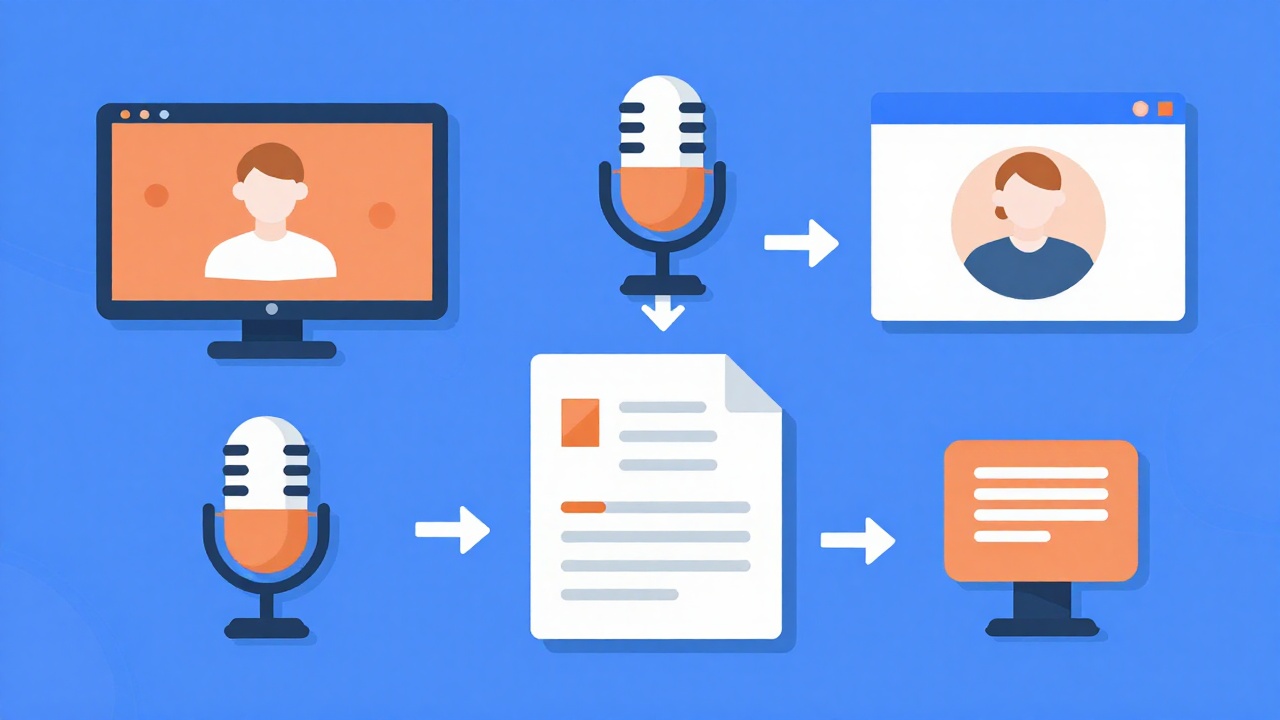
Almost any spoken-word video works: YouTube videos, webinars, podcasts (the video version), course lessons, conference talks, and interviews. The best candidates are videos where someone explains a topic, because the transcript becomes a strong first draft.
What does not convert well is content with little speech: music videos, silent footage, and pure gameplay. There is simply not enough spoken material to turn into a useful article.
A quick test: if you could write a decent article just by listening to the audio, the video will convert well. If the value is purely visual or musical, it will not.
The manual way and why it is slow
By hand, converting a video means doing each of these steps yourself:
- pull the transcript from the video
- delete filler words and repetition
- rewrite spoken sentences into readable prose
- add headings, lists, and short paragraphs
- pick a keyphrase and write the meta title and description
- add a cover image and embed the video
That is 60 to 90 minutes per article. For one video it is manageable. For a back catalog of dozens, it never happens, which is why most creators leave that traffic on the table.
How to convert a video with AI, step by step
An AI tool collapses the manual steps into one. Here is the flow:
- Paste the video URL. The tool fetches and cleans the transcript automatically.
- AI restructures it. Spoken text becomes a structured article with an intro,
H2andH3sections, and short paragraphs. - SEO is applied. You get a meta title, a meta description, a clean slug, and a keyphrase score so you know the post is optimized.
- Media is added. A cover image is generated and the original video is embedded.
- You review and publish. Edit anything in the editor, then export or publish to WordPress or Shopify in one click.
This is exactly what video2blog.ai does. For the deeper manual breakdown, see our YouTube-to-blog guide and the steps to turn a transcript into a post.
Make the converted post rank
Converting is step one. To rank, the post needs the basics right:
- One target keyphrase, used in the title, the intro, and at least one heading.
- An intro that answers the search intent in the first two sentences. This is what AI answer engines quote.
- An FAQ section with real questions, to win featured snippets and AI Overviews.
- Internal links to related posts and a clear call to action.
- Enough depth to match or beat the pages already ranking for your keyphrase.
Quality still matters. AI gives you a strong draft fast, but the posts that rank are the ones a human reviewed, fact-checked, and gave a point of view.
Convert your whole back catalog
The biggest result does not come from converting one video, it comes from converting all of them. A library of articles, each targeting a different keyphrase and interlinked into clusters, compounds your search traffic month after month.
Start with your best-performing or most evergreen videos, then work through the rest. For the full playbook on getting more from each upload, see seven ways to repurpose your YouTube videos.
FAQ
Can AI really write a good blog post from a video? Yes, when the video has clear spoken content. The AI restructures and optimizes the transcript, but you should still review it and add your own perspective.
Does it work for podcasts and webinars? Yes. Any video with a transcript works, including podcasts, webinars, and recorded talks.
Will Google penalize AI-assisted content? No. Google rewards helpful, original content regardless of how it was produced. Convert, then edit so the post is genuinely useful.
How long should the converted post be? Usually 1,000 to 2,000 words for a focused post, longer for an in-depth guide. Match the depth of the results already ranking for your keyphrase.
Conclusion
Every video you have made is a blog post waiting to happen. Converting them with AI turns a back catalog into a search-traffic engine, in a fraction of the time it used to take.
Try video2blog.ai free and convert your first video into a blog post in seconds.
Turn your YouTube video into a blog post
Try for free